
 Image 1 of 3
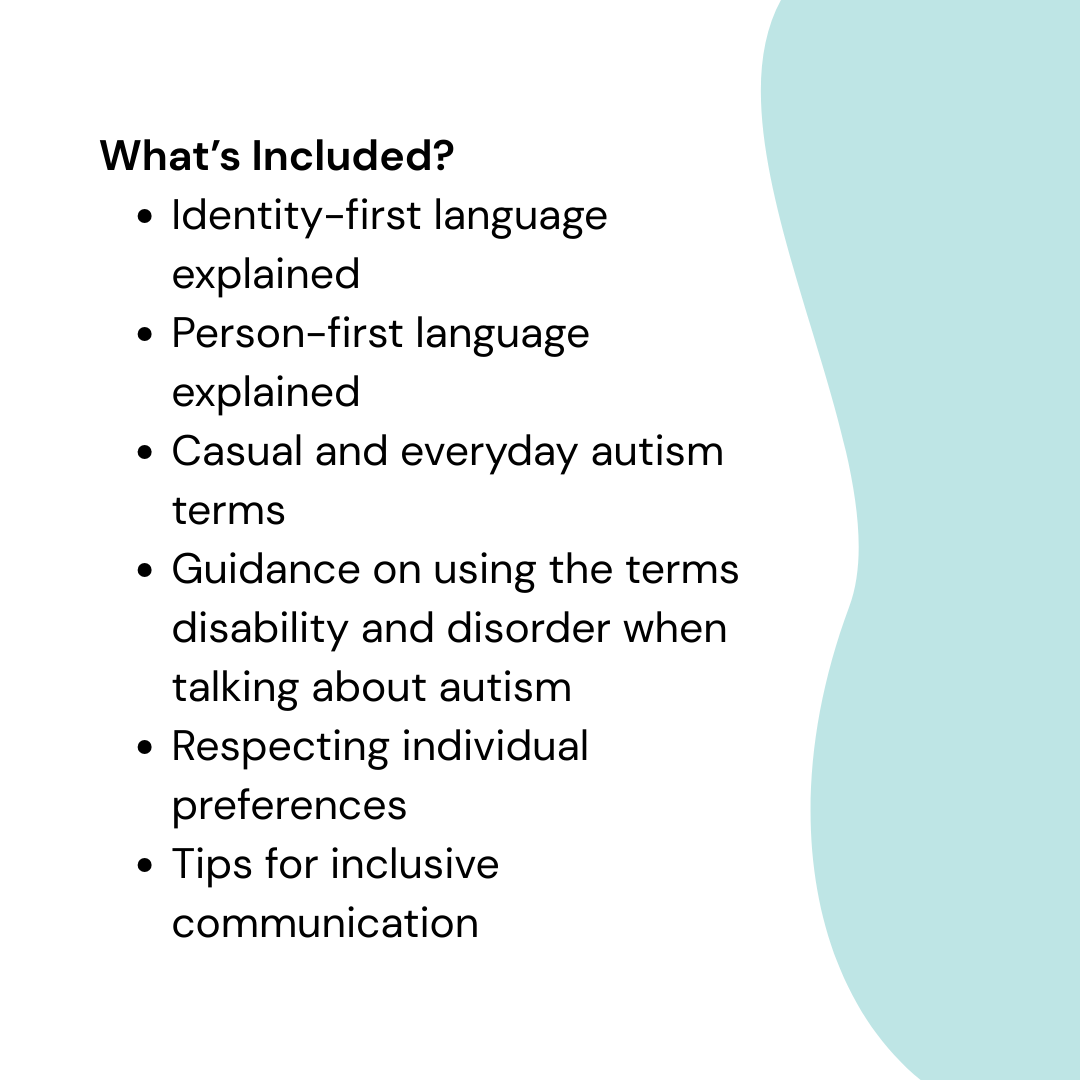 Image 2 of 3
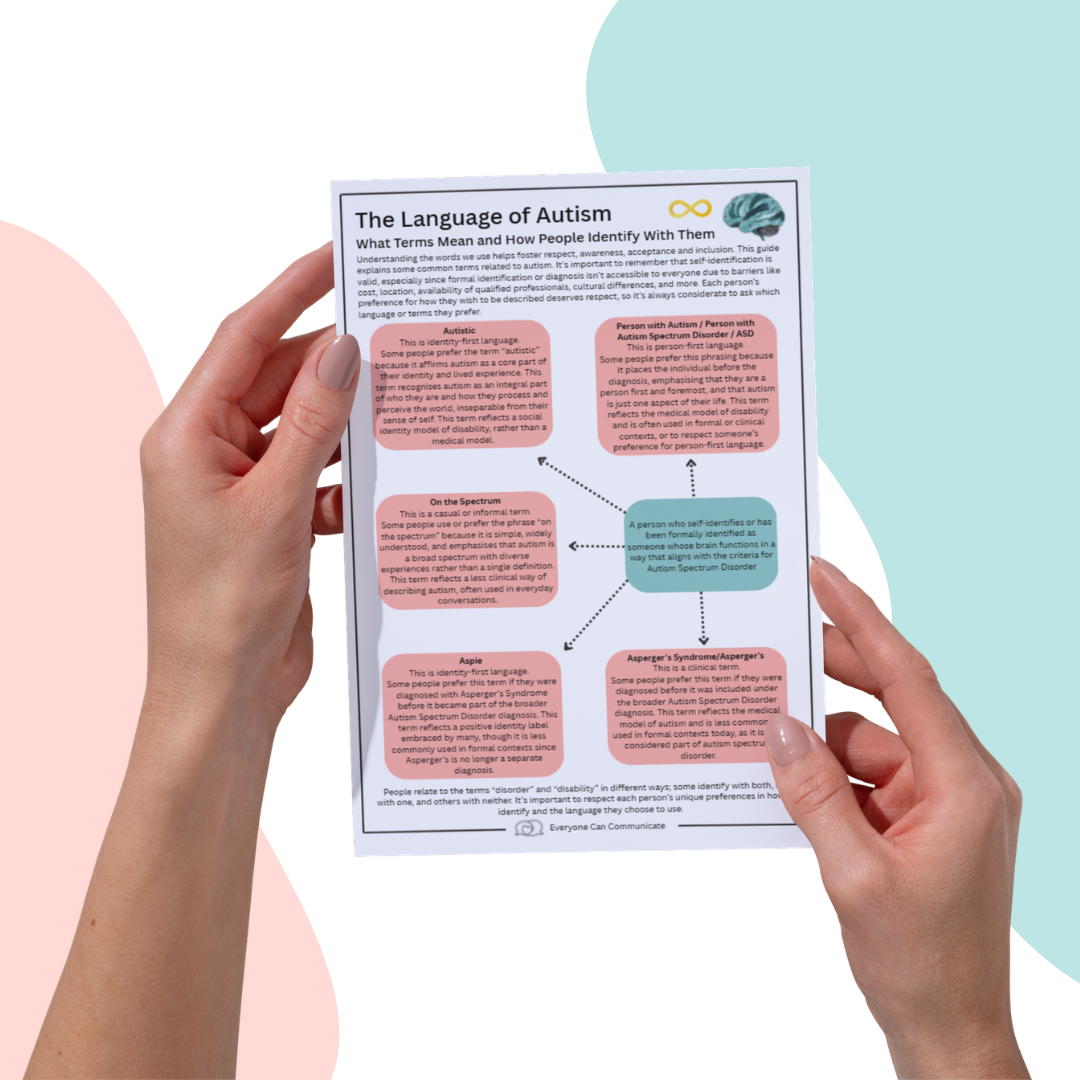 Image 3 of 3
Do you sometimes feel unsure which words to use when talking about autism?
Many people find it challenging to know what terms are considered respectful, accurate, or preferred. Do you want to refer to yourself or others in a way that feels right, but feel confused about identity-first versus person-first language, casual terms, or clinical labels.
Understanding the challenge
Language shapes how we understand and relate to each other. For the autistic community, the words we use can reflect identity, respect, and inclusion. Knowing the different ways people identify and the terminology they prefer can help reduce misunderstandings, foster acceptance, and support positive communication.
What this guide offers
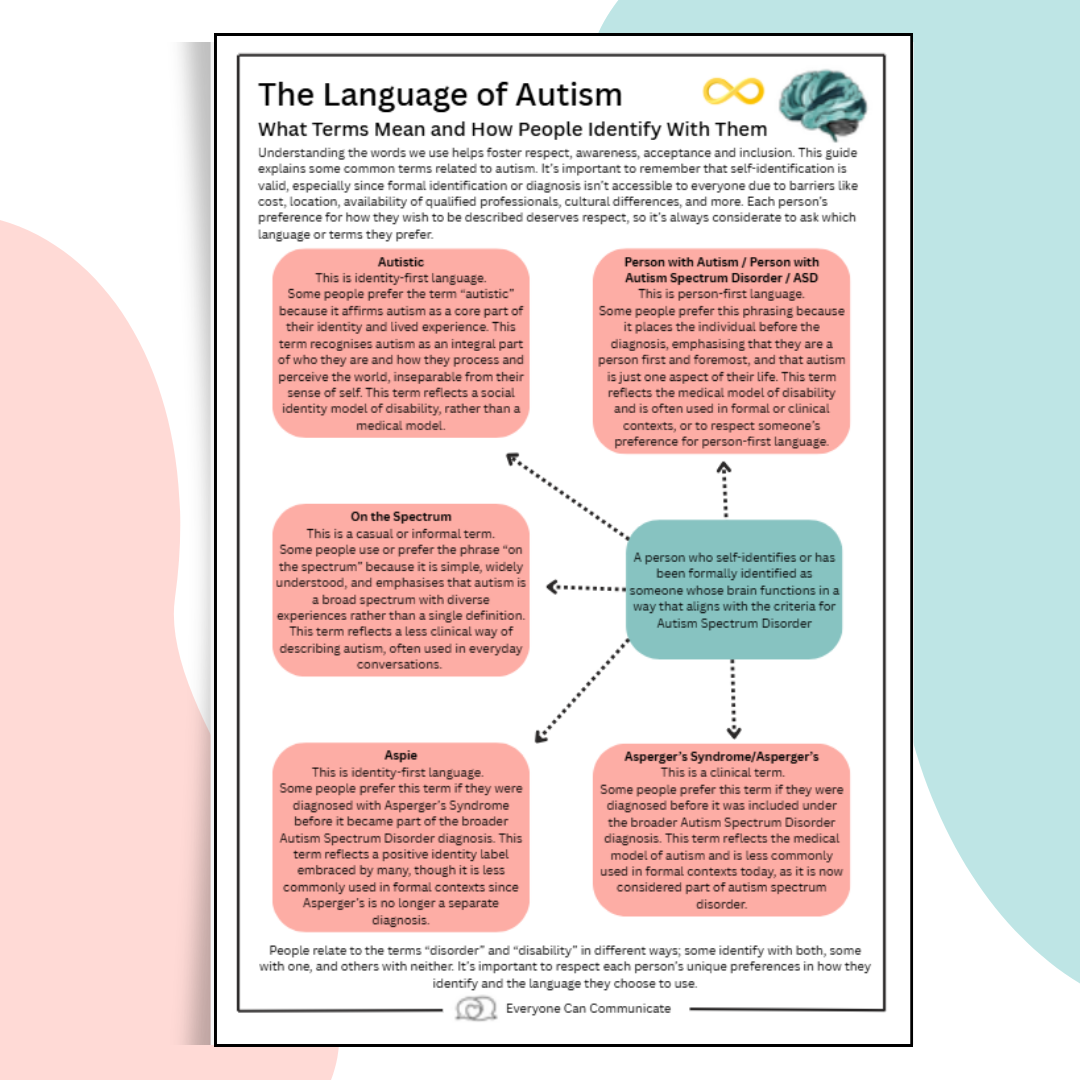
This downloadable PDF explains common terms related to autism. It includes identity-first language such as autistic and aspie, person-first language such as person with autism, casual terms like on the spectrum, and clinical terms such as Asperger’s Syndrome and Autism Spectrum Disorder. The guide also explores how people relate to terms like disability or disorder, and highlights the importance of respecting individual preferences. Using this guide can help you choose language that feels accurate, inclusive, and aligned with how someone identifies in everyday conversations or professional settings.
Who this resource may help
• People who feel unsure about which terms to use when talking about autism
• Anyone who wants to understand the difference between identity-first, person-first, and casual language when talking about autism
• Autistic adults or neurodivergent people exploring their own language preferences
• Anyone wanting to communicate respectfully and inclusively
Terms of License
This resource may be printed, displayed, given to clients, or used for individual use. It may also be referenced in training courses, workshops, and webinars (please provide the product link for participants).
This resource may not be resold or redistributed, and the digital file may not be shared or distributed.
This resource remains the intellectual property of Everyone Can Communicate.
For enquiries about additional uses of this resource, please contact admin@everyonecancommunicate.com.au
Do you sometimes feel unsure which words to use when talking about autism?
Many people find it challenging to know what terms are considered respectful, accurate, or preferred. Do you want to refer to yourself or others in a way that feels right, but feel confused about identity-first versus person-first language, casual terms, or clinical labels.
Understanding the challenge
Language shapes how we understand and relate to each other. For the autistic community, the words we use can reflect identity, respect, and inclusion. Knowing the different ways people identify and the terminology they prefer can help reduce misunderstandings, foster acceptance, and support positive communication.
What this guide offers
This downloadable PDF explains common terms related to autism. It includes identity-first language such as autistic and aspie, person-first language such as person with autism, casual terms like on the spectrum, and clinical terms such as Asperger’s Syndrome and Autism Spectrum Disorder. The guide also explores how people relate to terms like disability or disorder, and highlights the importance of respecting individual preferences. Using this guide can help you choose language that feels accurate, inclusive, and aligned with how someone identifies in everyday conversations or professional settings.
Who this resource may help
• People who feel unsure about which terms to use when talking about autism
• Anyone who wants to understand the difference between identity-first, person-first, and casual language when talking about autism
• Autistic adults or neurodivergent people exploring their own language preferences
• Anyone wanting to communicate respectfully and inclusively
Terms of License
This resource may be printed, displayed, given to clients, or used for individual use. It may also be referenced in training courses, workshops, and webinars (please provide the product link for participants).
This resource may not be resold or redistributed, and the digital file may not be shared or distributed.
This resource remains the intellectual property of Everyone Can Communicate.
For enquiries about additional uses of this resource, please contact admin@everyonecancommunicate.com.au